
Short answer: reinforce the door, don't just brace yourself for the storm
A standard garage door is the largest moving opening in most homes, and it's usually the least reinforced. When wind pressure builds against a house, the garage door is often the first thing to buckle, bow, or blow in. Once that happens, wind rushes into the garage and pushes up on the roof from the inside, which is how a storm turns a garage door problem into a roof problem. Before the season's first nor'easter rolls through, it's worth spending an afternoon checking the door's hardware, bracing, and seal instead of assuming it'll hold because it always has.
Why the garage door is a home's weakest wall
Every other exterior wall is a solid, continuous structure tied into the frame with studs, sheathing, and fasteners spaced closely together. A garage door is a large panel held in place by tracks, rollers, hinges, and a spring system, with the whole assembly only as strong as its weakest connection point. In high wind, that panel flexes. If the wind is strong enough or the door old enough, panels can buckle inward, rollers can pop out of the track, or the entire door can separate from the opening.
This matters more here than in a lot of places. A lot of the housing stock in this part of Brooklyn still has original garage doors, some decades old, installed before wind-resistance bracing was standard on residential doors. Add in exposure to nor'easters moving off the coast and you have older, unbraced doors facing wind loads they were never built to handle.
Symptoms that your door won't hold up in a storm
- Visible flex or bowing in the panels when the door is closed and wind hits it, even mild flex.
- Rollers that ride loosely in the track or a track with visible gaps, rust, or bent sections.
- Hinges with stripped screws or screws backed out partway, often from years of vibration.
- Weatherstripping that's cracked, flattened, or missing along the bottom and sides, which lets wind-driven rain in and signals the seal isn't doing its job.
- A door that shudders or rattles noticeably in gusty wind, rather than staying rigid.
- No horizontal struts on the back of the panels — older doors often lack this bracing entirely.
What actually reinforces a door against wind
- Install horizontal reinforcing struts across the interior of the panels, tied into the vertical track. This is the single most effective upgrade for wind resistance on an older door and is far cheaper than full replacement.
- Upgrade to heavier-gauge tracks and brackets if the current ones are visibly thin, rusted, or loose at the wall mounts. Mounting bolts should be lagged into solid framing, not just the drywall or trim.
- Check and tighten every hinge and roller bracket. A single loose hinge concentrates stress on its neighbors, and that's usually where a panel first gives way.
- Replace worn weatherstripping on the bottom seal and side tracks before winter. Beyond keeping wind and water out, a tight seal reduces how much the door flexes under pressure.
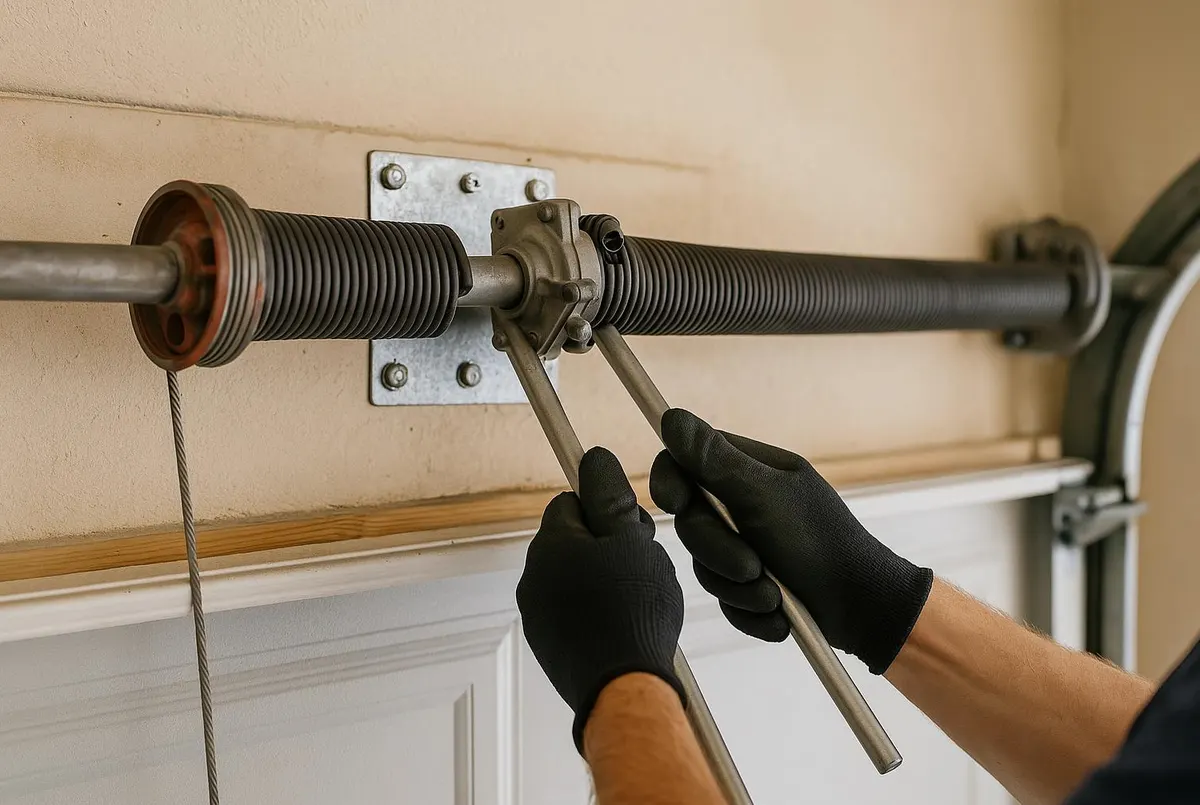
- Have spring tension checked. A spring that's lost tension makes the opener work harder to hold the door in place, which matters when wind is pushing against it too. This is also a safety issue — garage door springs are under serious tension and are not a DIY repair.
- Consider a wind-rated or impact-rated door if the current one is original to the house and showing its age. These are built with reinforced panels and track hardware rated for higher wind loads, which is worth factoring into a replacement decision rather than just matching the old door's style.
Timing it right for this season
Fall is the window to do this work. Once freeze-thaw cycles and road salt start in earnest, metal hardware corrodes faster and exposed fasteners seize up, making repairs harder and more expensive. Getting struts, hardware, and seals sorted now means the door is ready before the first real nor'easter, not during one.
When to call Brooklyn Overhead Door Co
If you're seeing panel flex, loose track hardware, or a door that's original to an older house, that's worth a professional look before storm season rather than after a bad wind event. We handle garage door maintenance visits that check spring tension, track alignment, and hardware torque, and we install reinforcing struts and upgraded bracing on existing doors. If the door itself is too far gone to reinforce reliably, we also handle full garage door installation with wind-rated options suited to older housing stock.
If you're in Bay Ridge, Dyker Heights, Bensonhurst, Park Slope, Sunset Park, Borough Park, or anywhere else in Brooklyn, call Brooklyn Overhead Door Co before the next storm front moves in. We'll check the door, tell you straight whether it needs reinforcing or replacing, and get it done before the wind does the deciding for you.